Production is part of the scope
Performance, observability, security, migrations, and release readiness are included in delivery.
Modernization should reduce business risk while improving the ability to change software. That usually means assessment, stabilization, boundaries, and phased replacement rather than an immediate big-bang rewrite.
The expensive part of Legacy Application Modernization is rarely the first implementation. It is every change that follows. Our approach protects future delivery with clear architecture, conventional code, tests, documentation, and observable production behavior.
Performance, observability, security, migrations, and release readiness are included in delivery.
Conventional code, bounded responsibilities, focused abstractions, tests, and documentation protect the next release.
Interface, data, backend behavior, integrations, deployment, and operations are planned as one system.
Legacy Application Modernization should be scoped around users, workflows, data ownership, integrations, search intent, and operating constraints. Location may affect language, accessibility expectations, payment providers, data hosting, legal review, and the systems that need to connect. Those decisions belong in discovery, before they become expensive implementation changes.
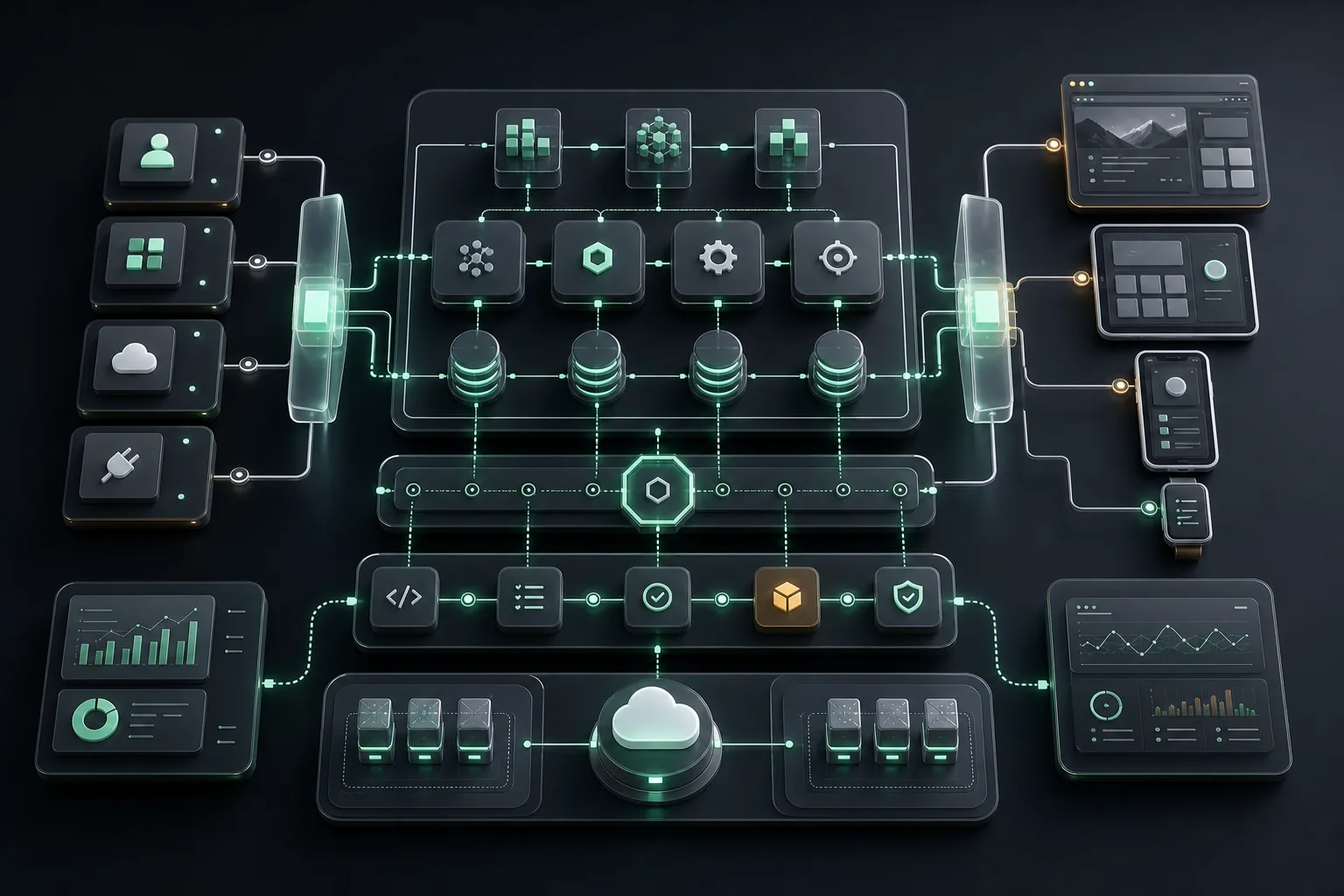
Review architecture, dependencies, runtime support, security exposure, data quality, performance, tests, deployments, incidents, release frequency, and the workflows that create business value. A rewrite is one option, not the default conclusion.
Backups, observability, dependency updates, characterization tests, release controls, and documentation reduce immediate risk. These improvements also create the evidence needed to change the application safely.
High-change or high-risk areas can be isolated behind modules or APIs. A new interface, upgraded runtime, extracted integration, or replaced workflow can then move independently while the rest of the application continues operating.
Migration includes data mapping, backward compatibility, parallel runs where appropriate, reconciliation, traffic or user cutover, rollback planning, and a clear point when the obsolete component is removed.
Laravel development in Turkey for SaaS products, APIs, portals, upgrades, integrations, performance, testing, and ongoing application support.
Specific guideCompare Laravel and Next.js for web applications by architecture, rendering, backend needs, team skills, operations, and long-term product ownership.
A rewrite is justified when incremental change cannot achieve the required security, operating, or product outcome at an acceptable risk and cost.
Many changes can use backward-compatible migrations, phased deployments, parallel runs, and planned cutovers to minimize downtime.
We identify critical journeys, add characterization and integration tests, compare data, improve observability, and release incrementally.
Yes, when the backend remains fit for purpose or can be exposed through a compatibility API.
Planning Legacy Application Modernization for Software? Start with the hardest requirement.
Discuss the project